Welcome

Check this blog daily for cell phone related News and Updates.

Welcome

Check this blog daily for cell phone related News and Updates.

Welcome

Check this blog daily for cell phone related News and Updates.

Welcome

Check this blog daily for cell phone related News and Updates.

Welcome

Check this blog daily for cell phone related News and Updates.

Sunday, September 16, 2012

7 innovative gadgets for senior citizens

 --ET Bureau 

If you have elders in the family with failing eyesight, memory or hearing, technology can prove to be an invaluable asset that helps with communication, reminders and health monitoring, Read on...

iBall Aasaan


Price: Rs 2,599 

Everything about the iBall Aasaan is catered for senior citizens. It has an extra-large keypad with a bright backlight, a bright orange monochrome LCD with large characters, extra-loud ringtones/call volume and a built in LED flashlight. An emergency 'SOS' slider sounds a loud alarm and automatically sends an alert SMS and starts calling five preset emergency numbers.

Samsung Jitterbug Plus


Price: Rs 7,000 

This flip phone has a keypad with extra-large buttons and large fonts on both the 2-inch internal and 1-inch external display. The earpiece volume can be turned up quite high for those with hearing impairments and the interface is simplified — most functions rely on a 'yes' or 'no' selection (there are large 'yes' and 'no' buttons on the keypad). It also has voice dialling, Bluetooth and a camera.

Memo Touch


Price: $599 

The Memo Touch is a tablet made for senior citizens. Apart from the hardware ($299), you also need a subscription to the caregiver service. A family member or caregiver can send memos and reminders to the 10-inch tablet. For elders interested in technology, advanced functions like calendar, todo lists, weather, medicine reminders, & a photo album can also be enabled.

Apple iPad


Price: Rs 30,500 

The iPad is a great device for elders. Not only does it have a large, responsive touchscreen, a simple user interface and some fantastic apps, but it also comes with great accessibility features such as voiceover (which speaks out your selection), zoom, large text and high contrast mode (white on black) — all of which cater to specific requirements. It also has an assistive touch function for those who have difficulty touching the screen.

Sony Universal Remote


Price: Rs 2,000 

This universal remote control can be configured to work with two devices simultaneously — a television and set-top box. It has large, clear buttons for commonly-used functions like volume, channel & power.

Polar FT7 Heart Rate Monitor


Price: Rs 9,500 

The Polar FT7 is capable of continuously monitoring your heart rate when worn on the wrist — no extra sensors are needed. It can also display calories burned, duration of activity and syncs data to a PC for analysis.

Med-e-lert Pill Dispenser


Price: Rs 5,000 

This automated pill dispenser has 28 compartments — a week's supply of pills, dispensed up to 4 times a day. A loud buzzer sounds until the pills are removed. It's great for people who tend to forget their medication. 

Karan Bajaj


Source..
The Times Of India

Samsung Reveals Galaxy Victory 4G LTE Priced Just At $99 Read more: Samsung Reveals Galaxy Victory 4G LTE Priced Just At $99 TechGadgetsWeb


Samsung had been busy lunching budget smartphones for the past few days. After an interval they have announced the Samsung Galaxy Victory 4G LTE at an economically feasible price. It will hit the market priced at just $99.
From this Sunday, Samsung Galaxy victory 4G LTE would be available in the stores. Specifications of this phone are similar to that of the Samsung Galaxy S III but it has a smaller screen. Victory is somehow different and ‘all in one’ kind of set for the smartphone lovers and that too at a mediocre price range.
It comes with a 4.0 inch display set with 1.2 GHz duel core processor and a 1 GB RAM. The phone also has a 5 megapixel camera. Of the low end smartphones Samsung Galaxy Victory surely speaks for itself.
A lot of the recent tech improvements of Samsung are included in this new smartphone. Some of those improvements include features like S-beam, S-voice.


Source..
TechGadgetsWeb 

Wednesday, August 22, 2012

MTS launches MTag 351, MTag 352 and MTag 281 Android smartphones

Sistema Shyam TeleServices Limited (SSTL) which nationally operates its telecom services under the MTS brand has announced the launch of three new Android-based smartphones – MTS MTag 351, MTag 352 and MTag 281. The new smartphones run on Android 2.3 Gingerbread OS and come bundled with MTS' unlimited data plans.
MTS MTag 351
The MTS MTag 351 features a 3.5-inch capacitive touchscreen with 320X480 pixel resolution. The device is powered by an 800MHz Qualcomm Snapdragon S1 Processor and comes with a 1,300 mAh battery. The MTag 351 features a dual camera with flash (3.0 MP back and VGA front); an expandable memory slot of up to 32 GB; bundled with a 2GB card in box and is available in two colours -  red and black. The smartphone has been priced at Rs. 7,499. Read the full specifications of the device here.
MTS MTag 352
The MTS MTag 352 also sports a 3.5-inch capacitive touch display with 320X480 pixel resolution. The device is powered by an 800MHz Qualcomm Snapdragon S1 Processor and comes with a 1,400 mAh battery. The MTag 352 has a 3.0MP rear camera, an expandable memory slot of up to 32 GB; and comes bundled with a 2 GB card in box. The MTag 352 is available for Rs. 6,499. To read the full specifications of the device, click here.
MTS MTag 281
The MTS MTag 281 features 2.8-inch capacitive touchscreen with 240X320 pixel resolution. The device is also powered by an 800MHz Qualcomm Snapdragon S1 Processor and comes with a 1,200 mAh battery. The device has a 3.0MP rear camera, memory slot of up to 32GB and comes bundled with a 2GB card. The device is available in three colours – red, white and blue. The MTag 281 has been priced at Rs. 5,499.
As said before, the company is offering unlimited “All You Can Use” data plans and local MTS to MTS Calls. Take a look at the plans in table below:
Announcing the launch of the new MTS phones, Leonid Musatov, Chief Marketing & Sales Officer, MTS India, said, “With the launch of these three Smartphones, we have now brought four new Android Smartphones in less than two months. MTS now offers a comprehensive range of Android Smartphones for discerning, on the move, tech savvy youth.”

Thursday, August 2, 2012

iPhone 5: 8-pins good; 30-pins bad


Apple‘s rumored mini Dock Connector for the iPhone 5 and other future iOS devices takes a simple approach to a common problem, it’s reported: figuring out which way to plug it in. Believed to not only slim down in comparison to the existing, 30-pin connector, but support being connected with the port facing either direction, the new version will take a straightforward path and simply double-up on its pins.


That means, while the connector itself will essentially be an 8-pin one, the plug will have twice that amount, so iLounge‘s sources claim. The female side – i.e. on the iPhone, iPad or iPod – will have eight, and either way the plug is inserted a connection will be made.
This new detail could explain why some rumors have indicated the new Dock Connector will be a 16-pin port, with a casual glance unlikely to explain that each active connection has two pins apiece. It’s also the best argument against Apple using regular microUSB in favor of its own, unique connection: microUSB, like the existing large Dock Connector, can only be inserted in one way.
Previous leaks have indicated that Apple will use the new style of port to introduce more stringent authentication for third-party accessories. Unlicensed add-ons for iOS products would be locked out altogether, so the sources claim, with a special chip at each end of the connection handling identification.

Wednesday, July 25, 2012

Samsung Galaxy Beam officially launches in India at Rs. 29,990

Samsung has officially released its projector phone, Galaxy Beam, in India. The Galaxy Beam is available at Samsung India's e-store for Rs. 29,990.


Samsung had announced its Galaxy Beam, also known as the Galaxy Beam GT-I8530 at the Samsung Forum event held earlier this year. The device went up for pre-order in India earlier this month.
The Samsung projector phone runs on Android 2.3 Gingerbread operating system. Right now there's no word on whether the device will be upgraded to Ice Cream Sandwich or the latest Jelly Bean.
The Samung Galaxy Beam has a 4.0-inch touchscreen with 480 X 800 pixels resolution. The device also has a 5MP auto focus camera as well as a 1.3MP front facing camera. The phone comes with 8GB of internal storage with a microSD slot up to 32GB. The device is powered by a 1GHz dual-core processor. It is equipped with a 2,000 mAh battery.
For connectivity, the device supports Bluetooth 3.0, Wi-Fi 802.11 b/g/n 2.4GHz, microUSB, USB 2.0 and GPS.
The main USP of the phone is the built-in projector, which boasts of 15 lumens brightness. It can project images up to 50-inches, and will be able to playback the media from the internal storage as well as a memory card.
Samsung recently expanded its Galaxy portfolio with the announcement of the Galaxy Chat, an Android 4.0 ICS-based QWERTY smartphone.
Meanwhile, check out more about the Galaxy Beam smartphone in the video below:

source : thinkdigit.com

Karbonn’s new release: Rajinikanth Kochadaiyaan mobile phones


When it comes to Rajnikant nothing is impossible. From movies to the gadget world, this actor has his impression everywhere.

If reports are to be believed, Karbonn Mobiles is going to launch an exclusive mobile phone range ‘Rajinikanth Kochadaiyaan` mobile phones.

Karbonn Mobiles has reportedly tied-up with the distributor of the Rajnikant’s upcoming flick Kochadaiyaan to make special edition phones. Karbonn Mobiles, under the new deal, will launch five lakh phones of Kochadaiyaan range.

Reportedly, the Rajinikanth phones and tablets around will be rolled out by September, October.

The new exciting Kochadaiyaan phone will include feature phones, smartphones and the newly-launched Karbonn Smarttab 1

The phone will be fine-tuned with some exclusive content like pre-installed acts, screensavers, dialogues, images, trivia and the signature tune of the movie. 

Buyers of this phone will be able to watch trailer of the film on the phone. The phone will have signature of Rajinikanth.

Monday, July 16, 2012

Samsung Galaxy SII gets Android 4.0.4 update


The Samsung Galaxy S II is getting an update, Google Android 4.0.4. This version of Android is the same that is found on the Samsung Galaxy S III. The update will be available Over The Air (OTA) or can be downloaded via Samsung Kies desktop. The update will bring with it a lot of stability features and bug fixes to the Samsung Galaxy S II.
The update will be available to unlocked handsets first and will subsequently be released for the handsets locked to carriers.
The Galaxy S II was originally launched with Android 2.3 Gingerbread and was one of the best handsets to hit the smartphone world. It has a 4.3-inch super AMOLED display, an Exynos dual-core Cortex-A9 processor clocked at 1.2GHz and a 1 650mAh battery. For more, check out the detailedreview of the Samsung Galaxy S II.
The Samsung galaxy S II is the predecessor to theSamsung Galaxy S III which was launched recently in India. The device runs on Android 4.0.4 has an Exynos 4212 Quad Core processor clocking at 1.4GHz, 1GB RAM, 4.8-inch Super AMOLED Display with a resolution of 1280x 720, Gorilla Glass 2 and 16GB internal storage expandable via microSD slot up to 64GB. To know more, check out the detailed review of the Samsung Galaxy S III
The 4.0.4 update for the Samsung Galaxy S II was leaked a few days ago and is finally available to device owners. It may not be available in all countries at once and we aren’t sure when devices in India will see the update. The Galaxy Note is also supposedly already receiving the the Android 4.0.4 ICS update, also OTA.
by :Thinkdigit

Micromax X259 solar phone launches in India at Rs. 2,499


Micromax has launched its first 'green phone', called X259. Priced at Rs. 2,499, the Micromax X259 comes with a solar panel that allows users to charge battery using solar energy. The company says its solar-powered mobile phone will be highly useful in rural areas of the country where power cuts are high.
Back in April, Micromax had revealed its plans of launching a phone with built-in solar charger. The Micromax X259 is a dual-SIM phone, featuring a 2.4-inch display with 240x320p resolution and 118mm X 50mm X 16mm dimensions. It has a 0.3MP camera. Micromax's X259 multimedia features include audio and video player and FM radio with recording. The device supports GPRS and Bluetooth. The X259 comes with a 1,000mAh battery, which is rated to deliver 4.5 hours of talktime and 200 hours of standby time.
Specifications of the Micromax solar phone are apparently nowhere close to the smartphones we have in the market currently. But then solar phones is quite an innovative concept, especially for countries like India grappling with acute electricity shortage. Hopefully, manufacturers come up with solar-powered smartphones in India in near future.
It's notable that Micromax's X259 isn't the first solar phone in India. In 2010, Vodafone had launched a solar powered mobile phone called VF 247. The Vodafone device, however, cost much cheaper at Rs. 1,500. Samsung India had also introduced a solar phone in 2010 called Solar Guru E1107 with a price tag of Rs. 2,799.

by :Thinkdigit

How mobile phone unlocking business is booming in Delhi's Gaffar market


Karol Bagh's Gaffar market, which is famous as one of Asia's biggest electronics market, is also famous for unlocking cell phones usually bought from abroad. Unlocking, which forms a part of the business of Gaffar and MCD markets, has been booming if we believe what shopkeepers say.
A SIM lock, network lock or subsidy lock is a capability built into GSM phones by manufacturers. Network providers use this capability to restrict the use of these phones in specific countries and networks.

"There are more than 30-40 players involved in this business and one player makes around Rs 10-12 lakh from unlocking in a month," claimed a shopkeeper requesting anonymity. "The total business generated from unlocking is around Rs 4.8 crore in a month," the source said.
On the contrary, according to Harish Chitkara, president of MCD market, the unlocking business generates a meager amount. "This business (unlocking) is not doing well because of various reasons. Today, most of the phones that people get from abroad are already unlocked and therefore there is not much demand for unlocking. Also, there are only 10 people who are into the business of unlocking. In a month, one person unlocks approximately 500 phones," he said. He also said that everybody takes the order for unlocking phones and gets them done by the main players.
MOBILE MONEY
Amount of money that a shopkeeper charges depends on the category of phone and how much money of the contract - between the shopkeeper and an insider in the phone company - is left. There is a difference in charges mentioned by shopkeepers and the president of the market. Harish Chitkara said, "Charges start from Rs 200 and goes maximum to Rs 2,000." Whereas players said that it starts from Rs 3,000 and goes up to Rs 7,000.
Also, a walk through Gaffar market area is enough to show that every second shop has a person sitting with a laptop which has 'Unlocking Phones Here' written on it. In light of this fact, the claim of the president looks suspicious.
CUSTOMER PROFILE
It needs to be mentioned that unlocking market caters to two kinds of customers. First, those who go to the UK and the US; take phones on contract there and rush back to India. Such phones (GSM) don't work here so they come to Gaffar market to get them unlocked.
Second kind of people that unlocking market caters to are those who become a victim of communication gap in foreign countries and bring phones to India without understanding the complications of contracts.
Harish Chitkara claimed, "Since all the mobile phones are launched in India around the same time as global market, there is not much demand for unlocking now and is on a decreasing trend."
Shopkeepers operating from this reason claim just the opposite. They say, "People who get phones under contract to India, do it intentionally just to earn big bucks. After buying phones on contract abroad, they lodge a complaint there that they have lost the phone. Under insurance, they get new phone and they bring the old one to Gaffar market either to sell or to get them unlocked." They also said that such people have increased in number over the years.
On asked to explain how unlocking happens, shopkeepers said, "Every guy who deals in unlocking has a guy sitting in America and London who works as a hacker for him. For example, if I have to unlock an iPhone, I will establish contact with a hacker who works in that company in America or whichever country. I will pay him some amount of the due money under the contract and he will unlock the phone. This is done with the help of softwares which are very costly."
On asked how this illegal activity is thriving here, Harish Chitkara, said, "Unlocking is not the core business of Gaffar. Only some players do this and since it is not connected to the Indian government, there has not been much problem." Whereas shopkeepers said that every now and then we keep bribing the police to stay in the market.
LCD CONNECTION
Electronics shops of Gaffar have started selling LCDs in the last one and half year. Shopkeepers who sell LCDs say that many people, who go to Bangkok, buy LCDs there and come to Gaffar market to sell them. Bringing one LCD to India is allowed and that helps them in bearing the cost of the ticket also.
"Many shopkeepers go to Bangkok with the purpose of buying LCDs and sell them in the market here. Since LCDs are available at cheaper rate there, we make a lot of profit by selling them at higher rate here. Also, people who go to Bangkok get a LCD along with them and sell them in our market," said Karan Deep Singh who runs Jai Mata Di shop.
Even though shopkeepers sell them at higher prices, for customers price is much lower than showroom price. This advantage comes with the problem that customers don't get any kind of guaranty and receipt here.
As many as 100 LCDs are sold every day here, which the shopkeepers call 'peanuts'.
by : ET

Thursday, July 12, 2012

Sony Xperia P mobile phone review


Launched in February this year, the Sony Xperia P sits above the recently reviewed Xperia U, in terms of hardware specifications. It also sits just below the flagship Xperia S, in the new NGT series of mobiles. That top-tier phone was unveiled in January, where ITProPortal published exclusive hands on photos of the phone, days before it was actually launched.
Setting up the Xperia P for the very first time involves eight steps. This is in the most complete set-up procedure that I have seen in a recent handset, including phones from HTC, Samsung, Nokia and LG mobiles.
The first step that sets the handset apart from others is the way it offers to download the phone’s Internet and multimedia messaging settings. This is followed by configuring access to Wi-Fi for syncing data, without using up your valuable mobile data allowance. The latter is a feature of the Android 4.0 Ice Cream Sandwich setup, but the Xperia P doesn’t even run that OS.
Next up you can configure your personal email accounts, with the usual range on offer: from Google to Microsoft Exchange. There is also the not-always-expected Facebook login, which is used for Sony’s own social networking client called TimeScape (but more on that later). The setup procedure ends with either logging on to, or creating an account for the Sony Entertainment Network. This gives you access to the company's collection of media, from major record labels to Hollywood studios, as well as what Sony has to offer.

Design

The three devices in the Sony next generation range all share a similar look and build. The new handsets look different from the previous flagship Sony Ericsson phone: the Arc and revamped Arc S. However, the height and width of the Arc S and Xperia P are not too dissimilar, at 125 x 63mm and 122 x 59.5mm respectively. Only the back of the older phone curves in the middle (giving it its name) and measures 8.7mm, at its thinnest point. This is compared to the constant 10.5mm thickness of the P.
This handset has design elements taken from the mid-2011 Sony Ericsson Ray. This was a bar style of phone, with a sleek form factor and an almost minimalist quality. It is made up from only four parts, with an aluminium unibody chassis that conveys a premium look and feel, even more so than the higher-end Xperia S.
At the base of the phone is a significant gap across its entire width, which has been filled with a transparent strip. This houses the touch sensitive back, home and option buttons. The phone’s radio antennae also reside here. The other two new Xperia devices all have their touch buttons located above the see-through area, and not embedded within it. This alludes to the P being more of the finished product, since many users of the Xperia S expected the buttons to be within the clear strip.
I would have liked to have seen the strip to add some functionality to the phone. Perhaps this bar could have displayed notifications when the screen is off or maybe alert you to incoming calls when the handset is in silent or meeting modes. Definitely something for Sony to think about, perhaps even via a firmware update.
On the right-hand side is the speaker, volume rocker and dedicated camera button - from top to bottom. The left side is home to the microUSB, mini HDMI and micro SIM card slot. I had a hard time using the SIM card slot; as a word of warning, get an official micro SIM card and not one cut down to fit. The charging port and HDMI are too close together for comfort. I often mistook one for the other and tried to jam a microUSB lead intro the HDMI port. The Xperia S, by comparison, avoids this issue with the ports on either side of the device.

Micromax launches Superfone A80 Infinity at Rs 8,490

Expanding its Superfone line of phones , Micromax launched its Superfone A80 Infinity priced at Rs 8,490. The dual-SIM smartphone boasts of 2,500 mAh LiON battery that the company claims will provide up to 7 hours of talk time and 288 hours of standby battery life.

A look at its specs: Superfone A80 Infinity faetures a 3.6-inch full-touchscreen display and the company's voice assistant tool AISHA. The smartphone has a 5 megapixel rear camera and a secondary front-facing 0.3 megapixel camera that includes night vision, multi-shot option, camera censor and multiple video recording formats.

The device runs Android 2.3 Gingerbread and is powered by an 800MHz processor. It supports expandable memory up to 32GB using a microSD card. A80 Infinity features a 9.525cm full touch screen

Micromax A80's voice recognition tool AISHA performs variety of functions including, social networking sites update, phone status, operate functions of the device, find locations, language translations, inquire date and time, weather conditions, and pose knowledge questions.

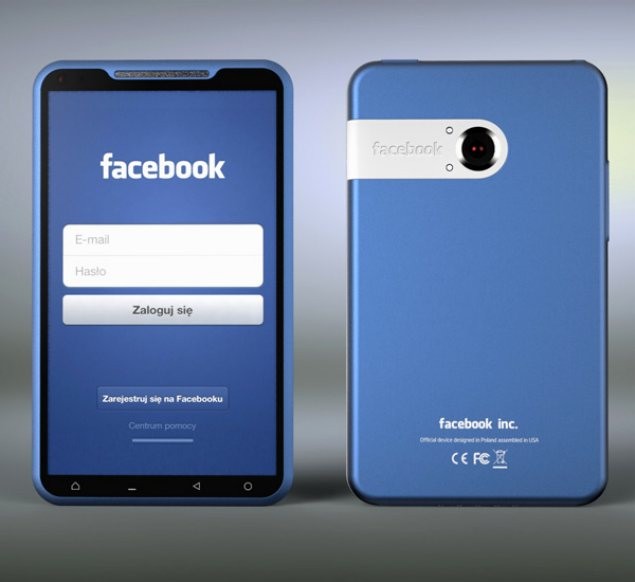
Impressive Concept Shows How the Facebook Phone Could Look


The Facebook Phone has become something like the unicorn of the technology world – always rumoured but never really seen. We’ve heard that HTC would make one, but that was a while ago and nothing has really come to fruition since.
The lack of any real news on a rumoured product doesn’t stop creative types mocking up concept images however, and these are often the cause of so-called “leaks” and the start of rumours. However, this concept design is exactly that – it’s not going to spark any rumours and we’re pretty certain Facebook isn’t going to make a phone like this, unfortunately.
Designer Michal Bonikowski is no stranger to the idea of designing a concept smartphone. In the past he’s famously made a great-looking Nokia Windows Phone concept which we still wish would become real. Now he’s taken to creating a Facebook phone, complete with an all-blue colour scheme.
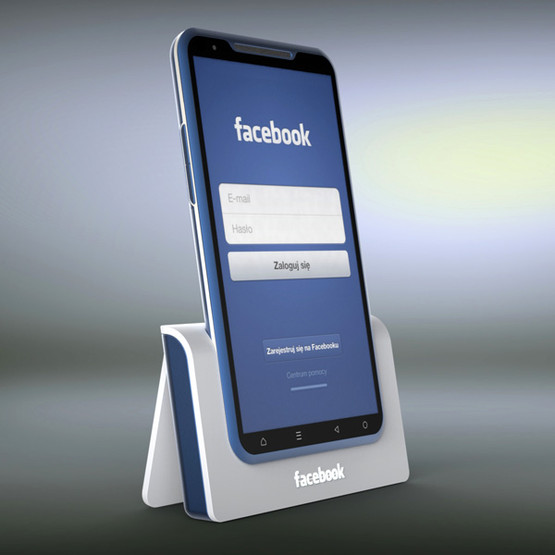
The handset features a large touchscreen with a fairly slim bezel surrounding it, especially at the bottom, where four touch buttons are located. These buttons don’t resemble any current mobile OS, supporting the idea that Facebook would create their own operating system if they did launch a smartphone.
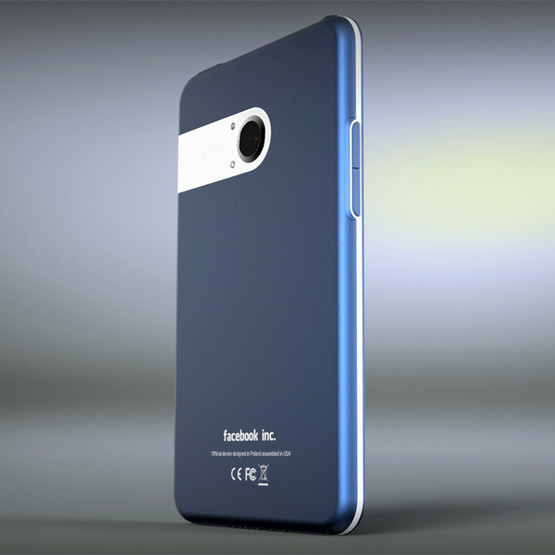
A rather large camera lens sits on the back along with the Facebook logo to its right. A volume rocker is located on the left edge of the phone, while the power button and 3.5mm headphone jack sit along the top edge.
By far the most exciting part of the design is a Facebook-branded dock that will provide cable-free inductive charging for the phone – something we’ve always felt that all phones should have.
With rumours of Facebook eying up a buyout of the Opera browser, it’s looking as though the social network is aiming to build up an entire suite of apps, including Instagram and the new Camera app. We’re still none the wiser as to whether it will ever launch its own branded smartphone, but we can dream.

Tuesday, July 10, 2012

Karbonn to launch Intel powered smartphone


Global computer chip manufacturer Intel, which partnered with Lava a couple of months back to launch the world's first Intel Atom Z2460 mobile processor based smartphone Xolo 900, in India has got into partnership with another Indian handset brand, Karbonn, to launch an Intel based smartphone by the end of this year.
Pardeep Jain, managing director, Karbonn Mobiles, said to The Mobile Indian, "Karbonn Mobiles will launch an Intel based Android smartphone by year end in India."
He added, "Our research and development team has been working with Intel on this project for quite some time now." However, he didn't reveal any further details regarding price or specifications.
Apart from Indian brands, many international players like Lenovo and Motorola have already started working on devices based on Intel's mobile Atom chips and users can expect many Intel based devices in the market.
Motorola has already announced that its Intel powered smartphones will be made available to global users towards the end of this year, but looking at Intel's eagerness we can hope to see the device much sooner.
The first Intel processor based smartphone Lava Xolo X900 is already getting a good response from consumers. It features a 4.03 inch touchscreen display, Near Field Communication (NFC) capabilities, and micro HDMI to output high quality videos.
Xolo 900 has a single core 1.6 GHz Intel Atom Z2460 mobile processor with Intel Hyper-Threading technology. This processor packs an array of technologies developed by Intel for faster performance with minimal possible compromise on battery life. The Integrated Graphics Media Accelerator on this handset will support all modern 3D graphics and high quality video playback.
On the camera front, Xolo X900 has an 8 megapixel rear camera which should ideally be able to record 1080p HD videos. This camera also features a burst mode, which will allow users to capture ten pictures within a second at 8 megapixel quality. There's also a front facing camera for video calls or video chat.

Monday, July 9, 2012

5 best dual SIM phones below Rs..2000

Mobile phones, especially low-cost and dual SIM, are a rage in India. People expect more features and specifications at an affordable price. 

Therefore, various top mobile phone/smartphone manufacturers are in a race to offer feature-filled mobile phones that are priced affordably. This ultimately has led to a large number of mobile phones that are feature-rich especially having the dual SIM support capability, at the same time offering latest multimedia (music, video etc) support. 

In order to provide people with effective information about the best low-cost dual SIM phones and enable them to make an informed choice, we have compiled a list of five such phones. 

Take a look at the below mentioned list:

Nokia 101

Nokia  101The Nokia 101 mobile phone costs Rs.1,699. It has got MP3 Player, FM radio, microSD card slot through which internal memory can be expanded up to 16 GB and a loudspeaker as well. This phone has a TFT screen measuring 1.8 inches that has a resolution of 128X160 pixels. 


Micromax X114

Miromax X114The price of Micromax X114 in India is Rs..1,650. It comes with a music player and FM Radio. It has a display that measures 1.5 inches and is also equipped with a microSD card slot through which memory support upto 2GB can be obtained. 


Nokia C1-00

Nokia C100The price of this dual SIM mobile phone is Rs..1,306. It has a TFT screen measuring 1.8 inches and  a resolution of 128X160 pixels. A loudspeaker and a 3.5mm jack support are in the offering. Apart from this, the Nokia C1-00 has FM radio. 


Lava Arc 02: 

Lava Arc 02The Lava Arc has got an FM radio and Music Player. Apart from these, it gives you Wireless FM Radio with radio recording, voice recorder and loudspeaker. Its display measures 1.5 inches. The price of the Lava Arc 02 in India is Rs..1,650. The Lava Arc 02 has a stylish look as well. 


Nokia X1-01


Nokia X101Probably the most powerful among today's economical and feature-filled mobile-phones, the Nokia X1-01 offers dual SIM card support, stereo FM Radio with RIDS, MP3 Player, a 16GB memory card slot and a really powerful speaker that produces clear sound output. The price of the Nokia X1-01 in India is less than Rs..2,000. 

Indian handset brands lose steam as overall mobile market declines

Indian consumers can look forward to steeper price drops and more features at the same price, says a study of the mobile handset market.


The mobile handset market in India declined by 5 per cent by revenue to Rs 31,215 crore during financial year 2011-12 against Rs 33,031 crore last year, a Voice & Data survey said on Monday.
The biggest impact has been on Indian phone brands such as Micromax, Spice and G5 due to declining sales in the feature phone segment and falling average selling value. Barring Karbonn and Lava, most of the other players have seen falling revenues, according to the survey.
Market watchers said that many Indian brands are finding it difficult to survive due to various reasons, including dollar movement against the rupee.
“Many of the companies were focusing on marketing and advertising, but they were not physically present with products. They were not investing much on research and development and feature rich products as per consumers’ demand,” Mr S.N. Rai, Co-founder and Director, Lava Mobiles, told Business Line.
He said going forward, handset makers will have to invest to increase value chain, R&D and contents otherwise it would be tough for them, to survive in the market. “Companies have to think of surviving for at least three years. Then only they can become big,” Mr Rai said.

NOKIA TOPS THE TABLE

Overall, Nokia remained the number one player in the handset business during the year with revenue of Rs 11,925 crore, despite eight per cent drop over Rs 12,929 crore last year.
At the same time, Korean major Samsung grew its revenue by 38 per cent to Rs 7,891 crore which was positioned second.
Home grown handset company Micromax with revenues of Rs 1,978 crore was ranked third though the company recorded a 13 per cent decline in its growth.
“It was a year of consolidation for us with few management changes and our focus to launch of tablet personal computers. However, volumes were still intact. But, revenue was down because 60 per cent of the industry sold below Rs 1,500 bracket for a handset including us,” a spokesperson form Micromax said.
Agreed Mr Deepesh Gupta, Managing Director, Zen Mobile, saying “Lot of companies who could not sustain their businesses because of lack in logistics, marketing and sales knowledge. That led to lowering down of average selling price though volumes were still growing.”
As consumers look for applications beyond voice and SMS the market would see fight for high-end feature phones and smartphones intensify further.
Consumers can also look forward to steeper price drops and more features in the same price, said Mr Ibrahim Ahmad, Group Editor, Voice & Data.
“Indian mobile phone brands that had hoped to make a mark by sourcing Chinese handsets and selling them only on the price plank were in for a big surprise. These players will have to quickly rethink their product, marketing and service strategy afresh to put their house in order,” he said.
Voice & Data is a journal for the telecom industry by CyberMedia group.
The firm surveyed over 30 mobile handset companies – both multi-national and Indian – selling feature phones, multimedia phones, enterprise phones and smartphones.
The Hindu

Sunday, July 8, 2012

Nitte students operate ATM by mobile phone


The aim of the project was to withdraw money from an ATM through a Bluetooth-enabled mobile phone using a J2ME application in the mobile phone for accessing the ATM. It aimed at replacing use of ATM (credit and debit) cards.
A group of students from Nitte Mahalinga Adyanthaya Memorial Institute of Technology (NMAMIT), Nitte, has developed an application for money transactions with an ATM through a mobile phone using Bluetooth.
The aim of the project was to withdraw money from an ATM through a Bluetooth-enabled mobile phone using a J2ME application in the mobile phone for accessing the ATM. It aimed at replacing use of ATM (credit and debit) cards.
While Rakesh Joshi, lecturer, guided the group, the students who participated in the project were Manohara P, Nithin P.S., Sunil Kumar Aithal, and Sanjay Kumar.
Sanjay told The Hindu that the group used a desktop computer as an ATM. The application allows the user to pay a shopkeeper from a mobile phone. (The recipient must have Bluetooth and the application on his computer.) He said the idea was not new but the group had done the application differently by using Bluetooth.
The software included two modules. One was a mobile application in J2ME, which acted as a client and was to be used by the customers of the bank. The application allowed the customer to detect the server via Bluetooth and log into his account using a security code and mobile number.
He withdraws money from his particular account using this mobile application. Two, there is a desktop application in Java and it acts as a server. It reads the security code, mobile number, and searches the database for a specific account. If the account is found, it deducts the amount requested by the customer and updates the database. Otherwise, it sends an error message.
The project can be modified easily, said the group members. Future changes could be implemented such as peer-to-peer mobile transactions and storage of money in mobile phones.
The application can be downloaded within seconds. At present, however, it is not online, said Sanjay, one of the group members. But security concerns are there during transactions. Future development of the application might overcome such issues, said the members.

New RFID Device Could Jam Your Cell Phone While Your Car is Moving


Drive on any road or highway, and you’ll come upon the same irritation. A car is going slowly in the left lane, or swerving in the right, or turning without using a signal. When you finally pass, you probably aren’t the least bit surprised to see what’s going on: The driver is distracted by a cell phone.
The use of mobile phones while driving isn’t just an irritation—it’s an increasingly dangerous trend. A survey by the Department of Transportation found that 18 percent of all distraction-related fatal car crashes in the United States involved a phone, and a University of Illinois study showed that talking on a phone consistently reduced drivers’ response times, whether they used a hands-free device or not. As smartphones proliferate, things are only getting worse: A recent survey of smartphone owners indicated that nearly 20 percent browse the web while driving, and data indicate that texting while driving may be even more dangerous than calling.
All of this has led dozens of counties and a majority of U.S. states to ban either calling or textingwhile driving. Obviously, though, inconsistently enforced laws aren’t enough to deter drivers from getting their communications fix. So a team of engineers at the Anna University of Technology in Chennai, India, has decided to use technology to force drivers to keep their eyes on the road.
Their prototype system, as described in an article published yesterday in the International Journal of Enterprise Network Management, uses radio-frequency identification (RFID) technology to automatically detect whether a car is in motion and if the driver is attempting to use a mobile phone. The system then triggers a low-range mobile jammer to prevent only the driver’s phone from operating, while allowing passengers to continue calling and texting freely.
Previously, technologies have been leveraged to prevent drivers from using cell phones in more indirect ways. The SafeTexting app for Android phones prevents the sending and receiving of text messages while a car is in motion—but it also prevents passengers from using their phones. Asystem presented last year at the International Conference on Mobile Computing and Networking uses a car’s speakers to produce a series of beeps, which are then detected by a phone only if it is in use and in the driver’s seat, thereby reminding the driver to hang up.
This new system goes one step further, actively blocking the transmission of data from a driver’s phone so that he or she has no choice but to stop trying to use it. Using RFID, the same technology present in electronic toll collection systems such as E-ZPass, the device automatically detects signals coming from the driver’s phone while the vehicle is in motion and uses a jammer to prevent transmission.
The engineers designed the system with the notoriously accident-prone Indian trucking industry in mind, envisioning truck owners installing it in hopes of preventing employee drivers from using phones while on the road. They also note, though, that it could be linked with local law enforcement efforts to prevent drivers from using phones. When the device detects a driver using a phone, it could automatically transmit data stored in a vehicle’s license plate RFID tag to a police reader, so the driver could be pulled over and given a ticket. Future state or national laws could, for example, force car manufacturers to include the device in all new cars as a mandatory safety feature, as occurred with seat belts and air bags.
All of this is sure to have road-safety advocates excited—and privacy advocates understandably concerned. When our devices are distracting us to the point of lethal accidents, should the police be able to electronically detect when we’re on the phone and jam our communications? It’s difficult to decide if privacy ought to be sacrificed for safety, but one thing is for sure: After years of technological advancements that have connected, entertained and eventually distracted us, future technologies to force our attention back on the road are sure to come.

Thursday, July 5, 2012

Android 4.1 Jelly Bean: faster, smoother, more delightful


"Project Butter" makes Google's operating system buttery smooth.

Android introduced Jelly Bean at I/O earlier today, but how many existing devices will see the update?

Google announced Android 4.1 at Google I/O today. With "Project Butter," the operating system has become faster and smoother, with an emphasis on smooth animations throughout.
The company has added what it calls "delightful improvements" to make the platform more pleasurable to use. Widget organization on the home screens has been enhanced with automatic repositioning and resizing, text input has been enhanced with a keyboard that predicts what you're typing before you even type it, and the operating system includes offline speech recognition.
Searching has also been extensively expanded, with rich semantic information courtesy of Google's knowledge graph, natural language voice search, and "Google Now," an automatic contextual search service that will tell you about appointments, flights, your daily commute, or anything else that you've recently searched for.
In "Project Butter," Google has worked to improve graphical performance and touch responsiveness. On the graphics side, Android is now v-synced at 60 frames a second, with triple-buffered graphics. The result is that scrolling, paging, and animations are all smoother and consistent.
To make touch feel better, Google is making it anticipatory, so that the touch data applications receive corresponds to where fingers will be the next time the screen is redrawn. This means that apps won't have to be one step behind where the user's fingers actually are. Jelly Bean will also immediately ramp CPUs to their full speed whenever touch interaction is detected. This avoids lag caused by slower processing when the CPUs are in low power modes.
For developers, the Jelly Bean SDK will include a new profiling tool, systrace, that provides a clear visualization of their applications' use of the CPU, GPU, and other system components, so that bottlenecks can be more readily identified and resolved.
Google showed off a handful of user interface improvements that it says will make using Android 4.1 more pleasing and will make the operating system accessible to more markets and more users.
Homescreen widget management has been enhanced to make customizing and organizing the homescreen much slicker. Widgets will intelligently move out of the way when new widgets are being added and moved, and will resize themselves if they're too large for the space available.
Text input has been improved in numerous ways. Google has improved its support for Arabic and Hebrew, and added new support for Persian, Hindi, and Thai. The on-screen keyboard has a better dictionary and has greater prediction: it will guess at entire words, based on the words already typed.
Voice recognition has also been enhanced; though it will use the cloud if an Internet connection is available, Android 4.1 also includes an offline speech-to-text engine that will perform speech recognition when the cloud is unavailable.
Jelly Bean should also be better for blind and partially sighted users. The operating system should be usable through a combination of gestures and speech, and can be paired with Bluetooth Braille devices.
Picture management through the camera application has been made simpler with a panning layout that allows you to swipe unwanted photos away.
Though NFC still isn't found on most Android phones, Google is working to make it more useful. Android Beam in Jelly Bean allows sharing of photos and videos just by tapping phones together, and Android 4.1 can now pair to combined NFC-Bluetooth devices such as headsets and speakers just by tapping the phone against the devices.
Notifications, already a strong point of the platform, have also seen a lot of improvement. Notifications can now be interactive—for example, allowing calls to be made and hung up directly from a missed call notification. They can also be expanded to show more detailed information without having to tap through and go into an actual application.
Search has also seen substantial work. Google recently rolled out its knowledge graph search features for Web users. The knowledge graph allows the search engine to provide rich semantic information in response to queries: it knows, for example, that "Angelina Jolie" is an actress who has made a number of movies, and can show you appropriate information about her career and the films she is in.
Jelly Bean includes these same capabilities in its search tool; a search for Angelina will show you a card with her picture, vital information, and recent releases. Similar information cards are available for searches about weather, restaurants, and more. Voice searching has also been improved, with the ability to read answers back to you and smarter responses to natural language queries.
The biggest new feature is "Google Now." With Google Now, the phone will pay attention to information such as where it iswhat you've searched for, and what appointments you have, and every time you go into the search widget, it will provide relevant contextual information.
For example, if you have a meeting coming up in an hour, Google Now might tell you travel information on how to get there. If it is around the time you make your daily commute, the program will check out the traffic automatically, and if it's looking bad, it will suggest an alternative route. If you go abroad, it will give instant access to currency conversions and tell you the local time back home.
Last but by no means least, Google has announced a new Platform Developer Kit (PDK) for OEMs, processor companies, and everyone else involved in the actual making of Android phones and tablets. Timely availability of updates has long been an annoyance with the Android platform, as the system builders have to do a lot of work to update and customize their distributions of the operating system.
PDKs will, in the future, ship two to three months before new versions of the operating system are made available and should contain all the software and information that these companies need to prepare for the impending releases. In principle, this should make the timely delivery of Android updates faster and easier. Google has been developing a beta PDK for Android 4.1 with select partners.
Android 4.1 will be made available to the Galaxy Nexus, Motorola Xoom, and Nexus S over-the-air from mid-July. The SDK for developers will be made available today.